
 Tiếng Việt



The 14 Major Stars
The 14 Major Stars
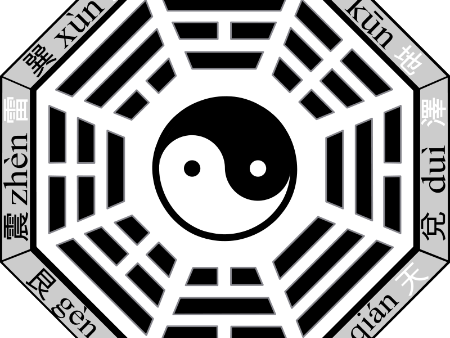
Fortune telling by Purple Stars Astrology is used to infer a person's destiny according to the mutual relationship of the palace position of the constellation. One of them, the Life Palace represents a person’s given trend of fortune. The Body Palace represents the acquired fortune. To analyze a person's lifelong destiny, it shall be based on his or her life palace primarily, and the body palace as supplementary, further coordinated by the migration palace, the official post and wealth palaces and the happiness and virtue palace.
Purple stars astrology is made up of 14 main stars: Namely Ziwei, Tianji, Taiyang, Wuqu, Tiantong, Lianzhen, Tianfu, Taiyin Tanlang, Jumen, Tianxiang, Qisha, Pojun, Tianliang and many complementary stars which are made up of: Qinyang, Tuoluo, Mars, Bell star, Tiankong, Dijie, Tianma, Tiantao, Zuobu, Youbi etc. These are arranged in the following 12 palaces: Life palace, Brother palace, Husband and wife palace, Children palace, Wealth palace, Vigorous distress palace, Migration palace, Servant palace, Official post palace, Tianzhai palace, Happiness and virtue palace and Parent palace. Great fortunes of every ten years and trend of fortune of each passing year may be precisely calculated in coordination with the concerned personal life and the four Hua stars.
The scope of Purple Star Astrology is broad and far reaching. Through the natal chart, a master may clearly see the great fortune, passing year, financial luck, marriage, emotional relationship, romance, marriage partner, business partner, enterprise, studies, health, disaster and distress etc.
The 14 Major Stars are the most essential and also the most diversified in their traits. The best way to be acquainted with them is to take them as people with different personality, and it is the reason I think it is best to name them in English by means of personification. Since Ziwei is likened to an Emperor, it is consistent to name the rest as the officials in the imperial court, hence Tianfu the Finance Minister, Tianxiang the Seal Minister, Qisha the Marshal, and so forth.
Although all of them carry a diverse range of traits, some of them are more complex than others. Lianzhen the Passion Star, for instance, is basically artistic, passionate, and very emotion-driven, and it can represent luck with reference to wealth, blood or feelings. Moreover, Lianzhen is also very sensitive to other Major Stars and Main Stars (the supporting cast of Auspicious Star, Adverse Stars, and the Enhancers) present, therefore, sometimes, merely looking at Lianzhen alone cannot reveal enough information.
Tanlang the Pleasure Star carries a very wide range of qualities too. While it may be the most indulgent in material and/or physical pleasure, it has also the quality to be very spiritual. Tanlang the Pleasure Star is one that has the most natural inclination to metaphysics too. It can also be selfish and accommodating at the same time.
As mentioned, Tianxiang the Seal Minister, in terms of personality, can indicate inherent clashes within oneself, confusing between being powerful - as the Seal Minister holds the Imperial Seal for officiating an edict written by the Emperor, and powerless - the Seal Minister does nothing else and unwilling to do anything else. It is also the Major Star that is the most sensitive to flanking effect - the aggregate influence by the stars placed in the immediate houses on its left and right.
As mentioned previously, too, Tianliang the Inspector may carry the provision nature or the punishment nature. It can also be known as the Problem Solving Star as it can attract many problems like a magnet.
However, it is exactly because of this very nature that the Major Stars of Ziwei Doushu provide very interesting information.
The six stars led by Ziwei the Emperor are placed in an anticlockwise sequence, and the other eight led by Tianfu the Finance Minister are placed in a clockwise sequence. Due to the given positional relationships between the two leaders, the two sets of Major Stars cross path to form 24 possible dual Major Stars' combinations.
Therefore, looking at it mathematically, there are altogether 38 possible types of Major Stars for a domain - the sum of the 14 stars and their 24 possible combinations.
It is even more interesting when we are assessing a personality profile. Since a complete profile is established by looking at both the Self Domain for displayed traits and the Thinking Domain for what goes on in the mind, we can have a minimum of 64 and a maximum of 98 possible types of personalities, depending on how stringent we go with the star brightness requirement. This is the most interesting part the knowledge gives me as the intrigue personality differences in people we study become plain and clear as an open book in Ziwei Doushu.... they can run, but they cannot hide. In fact, I love this so much so that I prefer to remember people by their main stars than their names.





.png)
Comment on this article